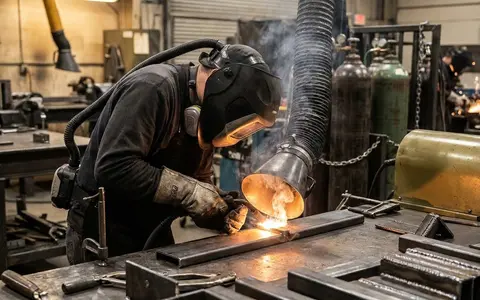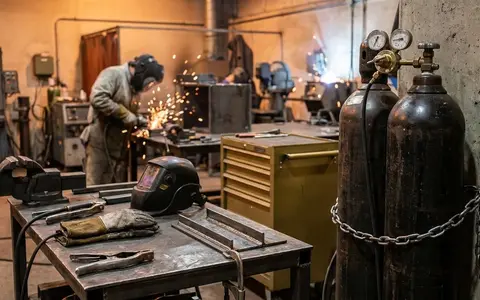
Shielding Gas for MIG and TIG: Argon, CO2 and Mixes
Compare C25 (75/25 argon-CO2), 100% CO2, and pure argon shielding gases for MIG and TIG welding, plus CFH flow rates and gas cylinder safety rules.
Blog
All guides (page 2 of 3): welding guides on settings, machines, safety and supplies, checked against AWS, OSHA and NIOSH sources, from Welders Net.
Compare C25 (75/25 argon-CO2), 100% CO2, and pure argon shielding gases for MIG and TIG welding, plus CFH flow rates and gas cylinder safety rules.
Learn stick welding (SMAW): how E6010, E6011, E6013, and E7018 rods work, polarity and amperage ranges, arc striking, drag technique, and safety.
Learn TIG welding (GTAW) step by step: DCEN vs AC polarity, argon flow, tungsten prep, filler technique, and safety rules.
Learn the 4 main types of welding—MIG, TIG, Stick, and Flux-Core—how each works, compatible metals, and how to pick the right process.
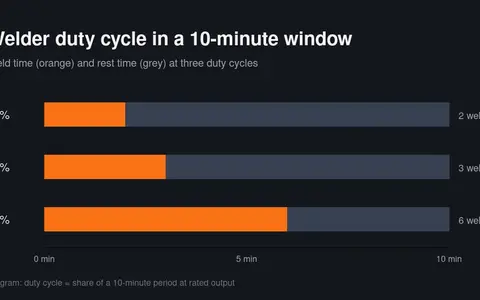
Duty cycle is the share of 10 minutes a welder can run at rated output. Learn the formula, read a rating plate and find your weld and rest minutes.
U.S. welders earn a median wage of $53,750 per year ($25.84/hour), with the top 10% earning $77,530 or more based on BLS 2025 data.
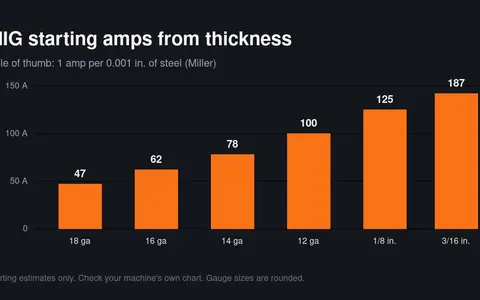
Starting welding amps by process, rod size and metal thickness for MIG, stick and TIG, plus gas flow ranges, from published manufacturer charts.
Understand how AWS Certified Welder (CW), CWI, D1.1, ASME Section IX, and API 1104 certifications work, and how to test at an Accredited Test Facility.
Follow OSHA 1910.252 and NFPA 51B hot work rules, the 35-foot combustible clearance rule, fire watch duties, and shop fire extinguisher selection.
Learn OSHA 1910.252 ventilation rules, NIOSH fume hazards like hexavalent chromium and manganese, and how to choose LEV, respirators, and PAPRs.
No tracking cookies are set on this site today. Any optional analytics or marketing service we add later will only start after you say yes. Your choice is saved on your device. More about cookies